


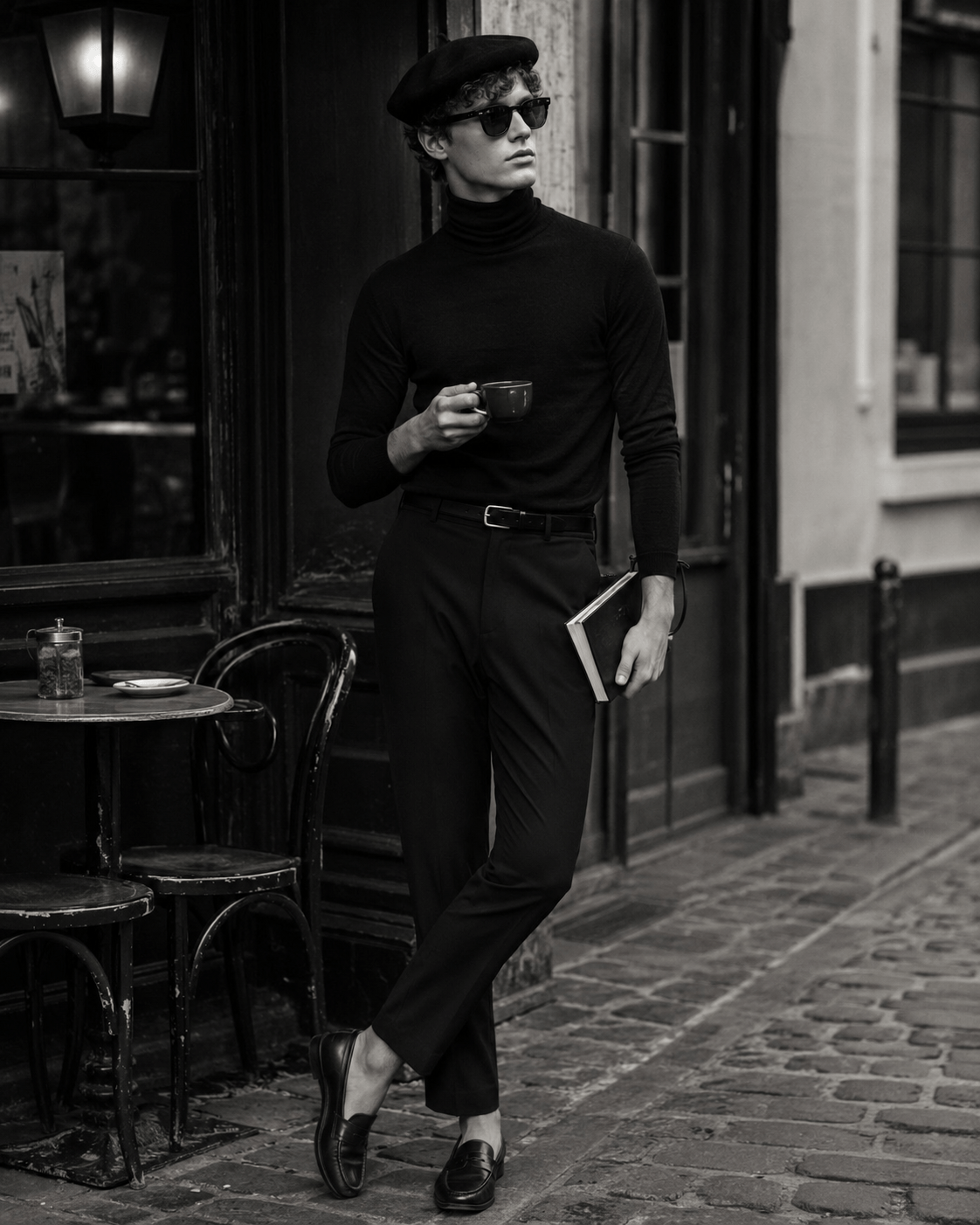
Beatnik fashion is instantly recognizable: black turtlenecks, narrow trousers, berets, dark glasses, simple flats, and an air of effortless intellectual cool. Yet the real style was far more varied—and far more interesting—than the familiar image of a poetry reader snapping their fingers in a smoky coffeehouse.
Emerging from the cultural rebellion surrounding the Beat Generation, the look rejected the polished consumerism and rigid dress codes of postwar society. Clothes were practical, affordable, understated, and often deliberately unconcerned with conventional ideas of respectability.
Today, the aesthetic offers a timeless blueprint for building outfits that feel artistic, minimalist, gender-fluid, and quietly rebellious.
Beatnik Fashion Quick Facts
Peak era: Mid-1950s to early 1960s
Core colors: Black, charcoal, cream, brown, navy, and burgundy
Signature pieces: Turtlenecks, berets, cigarette trousers, striped shirts, loafers, and oversized coats
Primary influences: Beat literature, bebop jazz, bohemian culture, European intellectual style, and anti-consumerism
Modern appeal: Minimalist, affordable, versatile, and easy to personalize
What Is Beatnik Fashion?
Beatnik fashion is a minimalist, bohemian style associated with the artists, writers, musicians, students, and cultural outsiders connected to the Beat movement of the 1950s and early 1960s.
Its visual language favored dark colors, uncomplicated silhouettes, practical layers, and clothing that appeared casual rather than carefully coordinated. Instead of displaying status through expensive garments, the wearer communicated creativity, independence, and indifference to mainstream expectations.
The classic interpretation includes:
- Black turtleneck sweaters
- Slim black trousers
- Berets
- Striped boatneck shirts
- Dark sunglasses
- Loafers, ballet flats, or simple boots
- Long coats and oversized knitwear
- Straight, natural hairstyles
- Minimal jewelry and makeup
However, treating this checklist as a strict uniform misses the spirit of the style. Authenticity comes from restraint, individuality, and a slightly imperfect finish—not from wearing every stereotype at once.
The History Behind the Beatnik Look
The Beat Generation Came Before the Beatnik Stereotype
The Beat Generation was primarily a literary and cultural movement rather than a formally organized fashion subculture. Writers such as Jack Kerouac, Allen Ginsberg, William S. Burroughs, Diane di Prima, and Gregory Corso challenged social conformity through experimental writing, travel, spirituality, political questioning, and unconventional lifestyles.
Beat poetry frequently used free verse and drew rhythmic inspiration from jazz, while also engaging with surrealism, Zen thought, visionary poetry, and other literary traditions.
The word “beat” carried several meanings. It could suggest exhaustion or being beaten down, but it also referred to musical rhythm and the spiritual idea of beatitude.
“Beatnik” arrived later. San Francisco columnist Herb Caen coined the term in 1958, combining “Beat” with the fashionable “-nik” suffix that had entered popular conversation after the launch of Sputnik. The label helped turn a complicated artistic movement into a simplified media character.
How the Media Created a Fashion Uniform
Newspapers, television programs, advertisements, films, and tourist attractions promoted an easily recognizable beatnik image. A stereotypical male beatnik wore a beret, goatee, dark glasses, and black turtleneck while playing bongos or reading poetry.
The female stereotype often included a black leotard, fitted capri trousers, long straight hair, and flat shoes. These images contained elements of real bohemian dress, but they exaggerated them into a marketable costume.
Many actual Beat writers dressed more practically. Period footage and personal accounts reveal flannel shirts, secondhand sweaters, worn khakis, workwear, inexpensive jackets, and whatever clothing people could obtain affordably. The polished, head-to-toe black look became more consistent in popular representation than it ever was in everyday Beat life.
That difference matters. Beatnik fashion was not originally about purchasing a coordinated collection. It emerged partly from limited budgets, secondhand shopping, anti-materialist attitudes, and a refusal to dress for suburban approval.
Jazz’s Influence on Beatnik Style
The Beat movement was deeply connected to modern jazz. Bebop’s improvisation, speed, complexity, and refusal to satisfy conventional commercial expectations appealed strongly to Beat writers, who attempted to bring similar spontaneity into poetry and prose.
Jazz-poetry performances became increasingly visible during the 1950s, with writers reading alongside musicians or structuring their words around jazz rhythms.
The familiar beret-and-dark-glasses image also owed a major debt to Black jazz musicians. Trumpeter Dizzy Gillespie, pianist Thelonious Monk, saxophonist Charlie Parker, and other bebop innovators shaped the music, language, attitude, and visual codes later absorbed into the white Beat scene and commercial beatnik stereotype.
Understanding this history prevents the aesthetic from being reduced to a quirky costume. The look developed through a layered exchange among jazz culture, working-class clothing, European bohemian imagery, literary rebellion, and commercial media.
The Essential Elements of Beatnik Fashion
A Restrained Color Palette
Black is the color most strongly associated with the aesthetic, but an entire outfit does not have to be pitch-black.
A useful palette includes:
- Black
- Charcoal gray
- Soft white
- Cream
- Tobacco brown
- Deep navy
- Olive
- Oxblood
- Muted burgundy
- Faded denim
These shades create visual consistency without making an outfit feel theatrical. Combining black with cream, gray, denim, or brown usually looks more natural than wearing identical black garments from head to toe.
Clean, Narrow Silhouettes
Traditional 1950s fashion often emphasized carefully structured shapes. Women’s mainstream clothing highlighted cinched waists, full skirts, matching accessories, and polished grooming, while conventional menswear relied on suits, pressed shirts, and formal hats.
Beatnik dress moved toward simpler lines. Slim trousers, straight skirts, fitted knitwear, loose coats, and unstructured separates created a less ceremonial silhouette.
The ideal shape is relaxed but intentional. Clothes should follow the body without appearing restrictive, heavily sculpted, or overly formal.
Minimal Ornamentation
Logos, sequins, elaborate prints, and decorative accessories usually work against the aesthetic. Texture matters more than embellishment.
Look for:
- Ribbed knits
- Worn cotton
- Brushed wool
- Corduroy
- Suede
- Matte leather
- Raw or faded denim
- Natural linen
A single textured garment can add depth to an otherwise monochromatic outfit.
The Beatnik Wardrobe Essentials
The Black Turtleneck
The black turtleneck is the most versatile foundation piece. It creates a clean neckline, works across genders, layers easily, and communicates intellectual minimalism without requiring accessories.
Choose a lightweight fitted version for indoor wear or a heavier ribbed knit for colder weather. Mock-necks are a practical alternative for anyone who dislikes fabric sitting high around the throat.
For a modern interpretation, pair one with:
- Straight-leg jeans and loafers
- Cropped trousers and ankle boots
- A midi skirt and ballet flats
- Wide-leg wool trousers
- A long coat and minimal sneakers
The Striped Breton Shirt
A black-and-white or navy-and-cream striped shirt introduces a subtle European influence. It also breaks up an all-black wardrobe while maintaining the look’s graphic simplicity.
Choose narrow or medium horizontal stripes with a crew, boat, or mock neckline. Avoid excessive decorative buttons, nautical motifs, or bright color combinations if you want the outfit to remain understated.
Slim or Straight-Leg Trousers
Cigarette trousers and fitted capri pants became strongly associated with the female beatnik stereotype. For a more wearable interpretation, select trousers that are narrow or straight rather than skin-tight.
Men and women can both use:
- Cropped black trousers
- Straight wool pants
- Dark chinos
- High-waisted cigarette pants
- Plain corduroys
- Dark, minimally distressed jeans
The hem should expose the ankle or sit cleanly over the shoe. Excess fabric around the ankle can weaken the sharp, compact silhouette.
Dark Denim
Although polished black trousers create the clearest vintage impression, dark denim reflects the practical side of Beat-era dressing.
Choose straight or gently tapered jeans in raw indigo, washed black, or charcoal. Avoid prominent fading patterns, rhinestones, oversized logos, and extreme distressing.
The Beret
The beret is optional—not mandatory.
It can sharpen a simple outfit, but combining it with a turtleneck, bongos, dark glasses, and a goatee risks turning the look into a parody. One unmistakable reference is usually more effective than five.
A beret can be worn:
- Straight across the forehead for a crisp shape
- Tilted slightly for a more artistic appearance
- Pushed toward the back for a relaxed bohemian effect
These remain common styling positions, each producing a different visual mood.
Choose wool or felt in black, charcoal, navy, or burgundy. Soft construction usually appears more natural than a stiff costume beret.
Loafers, Flats, and Boots
Footwear should feel practical and quietly stylish.
Strong options include:
- Black penny loafers
- Plain leather derbies
- Ballet flats
- Low-profile ankle boots
- Chelsea boots
- Minimal lace-up shoes
- Simple canvas sneakers
- Flat sandals in warm weather
Highly technical running shoes, platform club boots, and heavily branded footwear can overpower the outfit unless the goal is a deliberate contemporary contrast.
The Long Coat
A knee-length or calf-length coat adds drama without requiring decorative styling. Wool overcoats, car coats, trench coats, and oversized vintage jackets all work well.
Look for clean lapels, muted colors, and enough room to layer knitwear underneath. A slightly worn secondhand coat can feel more convincing than a pristine retro reproduction.
Simple Knitwear
Beatnik-inspired knitwear should look comfortable and lived-in.
Useful choices include:
- Crewneck sweaters
- Cardigans
- Fisherman knits
- Mock-neck pullovers
- Oversized black sweaters
- Fine-gauge merino tops
- Sleeveless knitted vests
Layer a cardigan over a plain T-shirt or wear an oversized sweater with narrow trousers to create balanced proportions.
Beatnik Fashion Versus Similar Aesthetics
| Style | Main Silhouette | Typical Palette | Defining Details | Overall Mood |
|---|---|---|---|---|
| Beatnik | Slim, straight, lightly unstructured | Black, cream, gray, brown | Turtlenecks, berets, loafers, stripes | Intellectual and rebellious |
| French-inspired chic | Polished and softly tailored | Navy, cream, red, camel | Breton shirts, scarves, structured bags | Refined and romantic |
| Mod | Sharp, geometric, youthful | Black, white, bright accent colors | Miniskirts, clean tailoring, graphic shapes | Energetic and futuristic |
| Dark academia | Layered and traditionally tailored | Brown, forest green, burgundy | Blazers, pleats, ties, vintage leather | Scholarly and nostalgic |
| Minimalism | Clean and highly edited | Neutral or monochrome | Precise basics, limited detailing | Modern and controlled |
| Grunge | Loose, layered, distressed | Muddy neutrals and faded tones | Flannel, torn denim, heavy boots | Raw and deliberately careless |
Beatnik style influenced later youth fashion rather than remaining isolated in the 1950s. The V&A notes that Mary Quant’s developing aesthetic was shaped partly by the Beatnik street style of London’s Chelsea Set alongside emerging Mod culture.
Beatnik Outfit Ideas for Women
Classic Coffeehouse Look
Combine a black mock-neck top with cropped cigarette trousers and simple ballet flats. Add a beret only when the rest of the outfit is extremely restrained.
Keep the hair natural and the jewelry minimal. A small silver ring or narrow watch is enough.
Relaxed Literary Look
Wear an oversized charcoal sweater over a white crewneck T-shirt with straight black jeans. Finish with loafers and a canvas or worn leather shoulder bag.
This outfit feels inspired by the era without appearing copied directly from a film.
Feminine Beatnik Look
Pair a fitted turtleneck with a straight midi skirt and low ankle boots. A narrow belt can add shape, although the outfit should not become overly structured.
Choose a skirt in black wool, charcoal plaid, corduroy, or dark denim.
Modern Monochrome Look
Combine a black fitted knit with wide-leg trousers and streamlined footwear. While the wider silhouette is less historically specific, the limited palette and absence of decoration preserve the beatnik attitude.
Add one sculptural silver accessory rather than several delicate pieces.
Warm-Weather Look
Wear a sleeveless black mock-neck top with cropped linen trousers and flat leather sandals. A cream canvas tote prevents the outfit from feeling too dark for summer.
A striped boatneck shirt with black shorts also works, provided the shorts have a clean, tailored shape.
Beatnik Outfit Ideas for Men
Traditional Minimalist Look
Start with a black roll-neck sweater and charcoal trousers. Add loafers, derbies, or plain leather boots.
A wool coat completes the look without relying on a beret or novelty accessories.
Practical Beat-Inspired Look
Pair a faded chambray or flannel shirt with dark straight-leg chinos and worn boots. This references how many people associated with the Beat movement actually dressed rather than recreating the polished media stereotype.
Layer with a secondhand cardigan or weathered work jacket.
Jazz-Club Evening Look
Wear a fine-gauge black knit with tailored trousers and a relaxed blazer. The blazer should be softly constructed rather than sharply corporate.
Dark glasses may work outdoors, but wearing them inside can make the outfit appear performative.
Casual Contemporary Look
Combine a plain black T-shirt with cropped trousers, white socks, and black loafers. Add a lightweight cardigan or unstructured overshirt.
This formula preserves the compact beatnik silhouette while feeling current.
Gender-Neutral Beatnik Styling
The aesthetic adapts naturally to gender-neutral wardrobes because its core garments are simple, practical, and not dependent on exaggerated masculine or feminine shapes.
A strong gender-neutral capsule might contain:
- Two black knit tops
- One striped long-sleeve shirt
- One white or cream T-shirt
- Straight black trousers
- Dark jeans
- A charcoal cardigan
- A long neutral coat
- Loafers or ankle boots
- One practical crossbody or canvas bag
- An optional beret
Focus on proportion rather than gendered clothing categories. A fitted top works well with loose trousers, while an oversized sweater gains definition from a narrower bottom.
How to Make Beatnik Fashion Look Modern
Use One Historical Signal at a Time
The fastest way to avoid a costume effect is to choose one clearly recognizable vintage element and surround it with modern basics.
Examples include:
- A beret with jeans and a contemporary wool coat
- A black turtleneck with relaxed trousers and minimal sneakers
- Cigarette pants with a plain T-shirt and modern leather jacket
- A striped boatneck shirt with dark denim and ankle boots
The reference remains visible, but the outfit still belongs in the present.
Change the Proportions
Original and stereotypical beatnik silhouettes were often narrow. Modern styling can introduce wider trousers, oversized outerwear, cropped jackets, or boxy knitwear.
Keep the palette and detailing controlled so the outfit retains its essential character.
Mix Black With Warm Neutrals
Pure black can appear severe, especially in daylight. Combining it with camel, tobacco, cream, faded olive, or dark brown adds warmth and creates a more sophisticated wardrobe.
A black turtleneck under a camel coat is often more wearable than an entirely black outfit.
Choose Better Fabrics
An outfit built from thin, shiny synthetic garments can look like a themed costume. Matte, textured materials feel more convincing and age more gracefully.
Prioritize wool, cotton, linen, denim, suede, and good-quality knit blends. These fabrics support the understated, lived-in quality central to the aesthetic.
Let the Outfit Look Slightly Unfinished
Beatnik style should not appear overly calculated. Rolled sleeves, soft wrinkles, visible sock lines, worn leather, and naturally textured hair can make the outfit feel personal rather than staged.
There is a difference between relaxed and neglected, however. Clothing should still be clean, functional, and intentionally combined.
Beatnik Accessories: What Works and What Does Not
Accessories That Support the Look
Use accessories sparingly:
- Narrow silver rings
- Simple watches
- Small hoop earrings
- Dark rectangular sunglasses
- Canvas messenger bags
- Worn leather satchels
- Plain scarves
- Berets
- Minimal belts
- Vintage-style notebooks
One or two pieces are usually sufficient.
Accessories to Avoid
The following combinations can push the outfit toward caricature:
- A beret, dark glasses, and fake goatee worn together
- Plastic cigarette holders
- Decorative bongos used as props
- Oversized novelty poetry books
- Multiple “French” accessories in one outfit
- Theatrical black eyeliner paired with a full costume
- Artificially distressed garments designed to look bohemian
The objective is to interpret an aesthetic, not impersonate a fictional beatnik character.
Hair and Makeup
Beatnik-Inspired Hair
Hair was often represented as natural, straight, short, or deliberately unfussy. Women were frequently depicted with long, straight hair or short sculptural cuts, while men might wear slightly longer hair, facial hair, or a goatee in contrast with conservative grooming standards.
Modern options include:
- A blunt bob
- A short pixie cut
- Natural curls without elaborate styling
- Long, straight hair with a center part
- A relaxed low bun
- A slightly grown-out masculine cut
- Neatly maintained facial hair
Avoid forcing a hairstyle that does not suit your texture or daily routine. The most authentic choice is one that looks natural on you.
Beatnik-Inspired Makeup
Makeup can range from nearly bare to dramatically defined eyes.
For a subtle version, use:
- Light skin tint
- Softly defined brows
- Brown or black mascara
- Muted rose or nude lips
For an evening version, add graphic black liner while keeping the rest of the face restrained. Heavy contouring, glitter, glossy lips, and multiple statement features can conflict with the minimalist wardrobe.
Seasonal Styling
Spring
Layer a striped shirt beneath a lightweight trench or cotton jacket. Pair it with cropped trousers and loafers.
Use cream, navy, and washed black to lighten the palette.
Summer
Choose sleeveless mock-necks, linen trousers, cotton skirts, canvas shoes, and breathable shirts. Avoid heavy synthetic turtlenecks, which can quickly become uncomfortable.
A black-and-cream palette provides the visual effect without excessive layers.
Autumn
This is an ideal season for beatnik fashion. Combine fine knitwear, corduroy, wool trousers, suede shoes, and long coats.
Introduce burgundy, tobacco, olive, and charcoal for depth.
Winter
Use thermal layers beneath turtlenecks and wool sweaters. Add a long overcoat, leather boots, dark scarf, and wool beret.
Vary textures to prevent an all-black winter outfit from appearing flat.
How to Build a Beatnik Capsule Wardrobe
A capsule wardrobe makes sense for an aesthetic rooted in simplicity and resistance to excessive consumption.
Begin with ten versatile pieces:
- A fitted black turtleneck
- A relaxed black or charcoal sweater
- A striped long-sleeve shirt
- Straight black trousers
- Dark jeans
- A plain white or cream T-shirt
- A long wool coat
- A cardigan or unstructured blazer
- Black loafers or ankle boots
- A canvas or leather everyday bag
These garments can produce dozens of combinations without requiring trend-driven purchases.
Before buying anything new, examine what you already own. A plain black sweater or pair of straight trousers may become beatnik-inspired through styling rather than replacement.
Shopping for the Look
Start With Secondhand Clothing
Thrift stores, vintage sellers, resale platforms, and charity shops are particularly suitable for this style. The aesthetic benefits from garments that have texture, softness, and visible history.
Search for broad clothing descriptions rather than only “beatnik fashion.” Sellers may charge more when an ordinary black turtleneck is marketed as a rare subculture piece.
Useful search terms include:
- Vintage black roll-neck
- Ribbed mock-neck sweater
- Cropped wool trousers
- Straight-leg corduroy pants
- 1950s-style car coat
- Black leather loafers
- Breton stripe shirt
- Vintage wool beret
- Oversized charcoal cardigan
Evaluate Construction
Check seams, hems, buttons, zippers, lining, and fabric condition. A small amount of wear can add character, but damaged knitwear and cracked imitation leather may not justify the price.
Natural fibers are desirable, but blends can provide durability, stretch, and easier care. The best garment is one you will actually wear.
Avoid Buying a Ready-Made Costume
Prepackaged “beatnik” sets often rely on flimsy fabrics and exaggerated stereotypes. They may work for a theatrical event, but they rarely produce a convincing everyday wardrobe.
Build the outfit from real garments that can be worn separately.
Common Beatnik Styling Mistakes
Wearing Every Iconic Item Together
A black turtleneck, beret, sunglasses, cropped pants, striped shirt, and poetry prop create visual overload. Select two or three related elements at most.
Confusing Beatnik With Generic French Style
The two aesthetics overlap through berets, stripes, and dark basics, but their moods differ. French-inspired dressing is often polished and romantic, while beatnik style is more austere, intellectual, bohemian, and anti-establishment.
Ignoring the Movement’s Working-Class Practicality
Luxury designer pieces can interpret the look beautifully, but expensive labels are not required. Secondhand knitwear, worn trousers, and practical shoes may be closer to its original spirit.
Making the Outfit Too Perfect
Every hem does not need to align, and every accessory does not need to match. A little looseness prevents minimalist clothing from feeling sterile.
Treating Black as the Only Option
Black is important, but excessive use can flatten the outfit. Charcoal, cream, navy, brown, and faded denim add dimension while preserving the atmosphere.
Forgetting Cultural Context
The Beat aesthetic did not develop in isolation. It borrowed heavily from bebop jazz, Black musicians, European bohemia, working-class dress, and broader artistic countercultures.
Acknowledging those influences creates a more accurate and respectful understanding of the style.
The Advantages and Limitations of Beatnik Style
Advantages
- Most pieces are easy to find
- Neutral colors simplify outfit coordination
- The wardrobe can be gender-neutral
- Garments work across multiple seasons
- Secondhand shopping suits the aesthetic
- The look adapts well to minimalist wardrobes
- Individual pieces can be worn outside the theme
- It does not depend on visible designer labels
Limitations
- Too much black may feel repetitive
- The classic styling can become costume-like
- Turtlenecks do not suit everyone’s comfort preferences
- Dark outfits may require texture to photograph well
- The aesthetic can be oversimplified into stereotypes
- Vintage cuts may need tailoring for a modern fit
Most of these limitations can be solved by varying textures, adjusting proportions, and using historical references selectively.
Frequently Asked Questions
Is beatnik fashion from the 1950s or 1960s?
It is most closely associated with the mid-to-late 1950s and early 1960s. The Beat Generation developed before the word “beatnik” was coined in 1958, while the commercialized fashion image remained influential into the following decade.
Did real Beat writers always wear black?
No. Head-to-toe black became a powerful media shorthand, but many people associated with the Beat movement wore ordinary secondhand clothing, flannel shirts, sweaters, khakis, denim, and practical jackets.
Can beatnik style include color?
Yes. Black should function as an anchor rather than a strict requirement. Burgundy, olive, cream, navy, gray, tobacco brown, and muted red all work well.
Do you need a beret?
No. A black turtleneck, straight trousers, and simple shoes can communicate the aesthetic without headwear.
Is beatnik fashion gender-neutral?
Many foundational pieces—turtlenecks, straight trousers, striped shirts, loafers, cardigans, and long coats—can be styled across gender categories. Fit and proportion matter more than the department in which the garment is sold.
What is the difference between Beat and beatnik?
“Beat” refers to the broader literary and cultural movement. “Beatnik” was a later media label that helped create a simplified public stereotype involving coffeehouses, poetry, bongos, berets, and black clothing.
How can I wear the style without looking like I am in costume?
Use one or two historical references with modern basics. Skip novelty props, choose good fabrics, vary the palette, and avoid wearing every signature item simultaneously.
Is beatnik style suitable for work?
Yes, particularly in creative or business-casual workplaces. A black mock-neck, tailored trousers, loafers, and an unstructured blazer create a professional interpretation.
For conservative offices, replace the beret and distressed vintage pieces with polished outerwear and structured shoes.
Final Thoughts on Beatnik Fashion
Beatnik fashion endures because its strongest elements were never dependent on short-lived trends. Dark knitwear, straight trousers, practical shoes, oversized coats, and restrained accessories remain useful decades after the coffeehouse stereotype entered popular culture.
The most compelling version does not imitate a 1950s cartoon. It combines the style’s intellectual minimalism with an understanding of its deeper roots in literature, jazz, bohemian life, economic practicality, and cultural rebellion.
Build slowly. Shop thoughtfully. Wear fewer elements with greater confidence.
That is how beatnik fashion moves beyond costume and becomes a distinctive, personal way of dressing.