


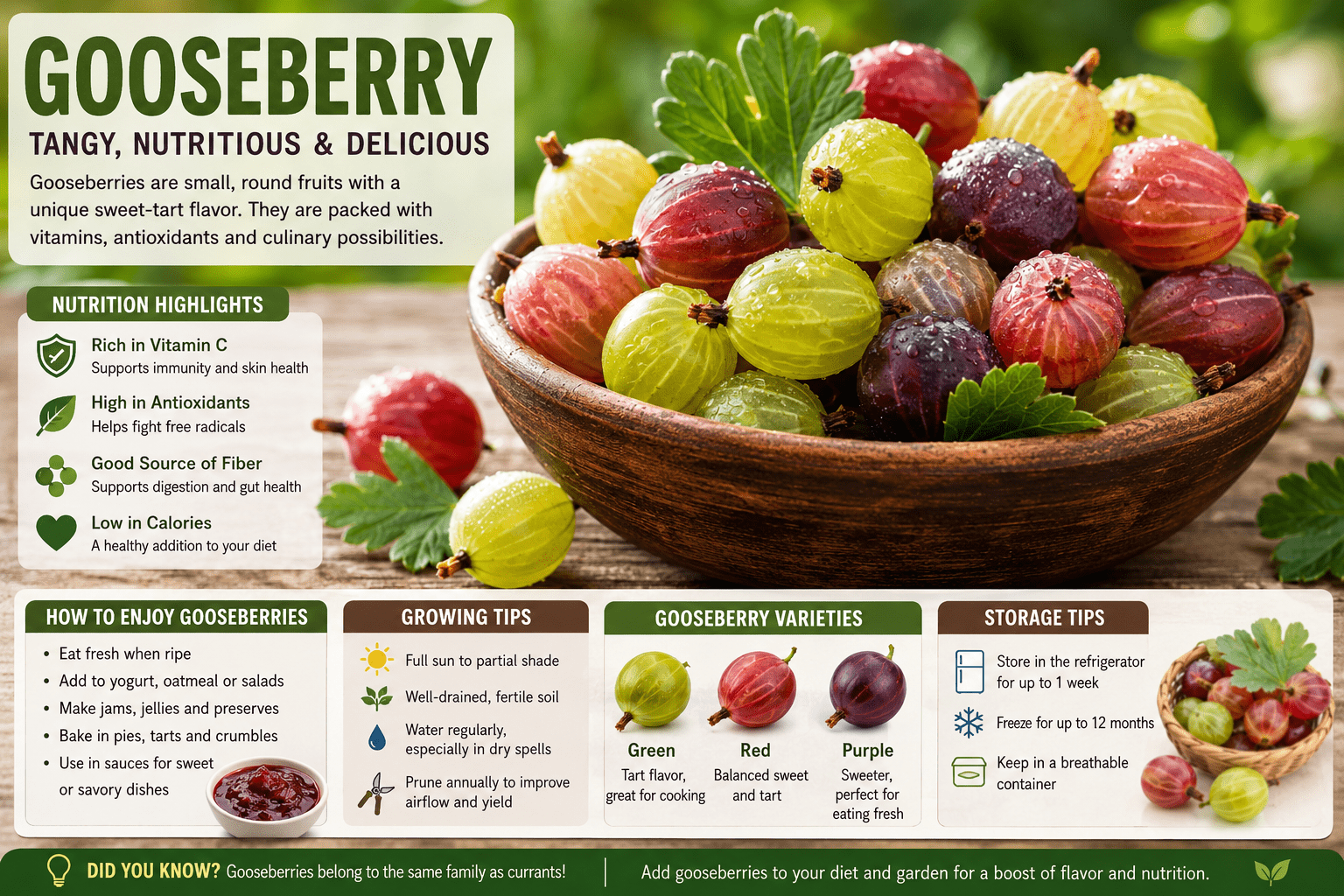
A gooseberry is a small, round fruit prized for its bright, tangy flavor, impressive versatility, and ability to thrive in cooler climates. Depending on the variety and ripeness, gooseberries can taste sharply tart, pleasantly sweet, or somewhere between the two.
For cooks, gardeners, and anyone exploring less-common fruits, gooseberries offer far more than novelty. They can be eaten fresh, baked into desserts, turned into preserves, paired with savory foods, or grown successfully in a surprisingly modest amount of garden space.
Quick facts
- Common name: Gooseberry
- Plant type: Deciduous fruiting shrub
- Typical fruit color: Green, yellow, red, pink, or purple
- Flavor: Tart to sweet-tart
- Best growing conditions: Cool to moderate climates
- Common uses: Fresh eating, pies, jams, sauces, compotes, desserts
- Harvest season: Usually summer, depending on climate and cultivar
What Is a Gooseberry?
The traditional garden gooseberry belongs to the genus Ribes, the same group that includes currants. European gooseberries are commonly associated with Ribes uva-crispa, while numerous cultivated varieties and hybrids are grown for their flavor, disease resistance, yield, and fruit size.
The berries grow on compact, woody shrubs. Many traditional plants have thorns, although newer cultivars may be less thorny or nearly thornless.
Gooseberries vary considerably in appearance. Some remain translucent green when ripe, while others develop yellow, pink, deep red, or purplish skins.
What Does Gooseberry Taste Like?
An underripe gooseberry can be intensely tart, with a crisp bite reminiscent of sour grapes, green plums, or sharp apples. As the fruit ripens, acidity generally softens and its natural sweetness becomes more noticeable.
Fully ripe dessert varieties may be sweet enough to eat directly from the bush. Cooking varieties are often harvested earlier, when their higher acidity works especially well in jams, pies, and sauces.
Gooseberry vs. Cape Gooseberry vs. Amla
The word “gooseberry” can cause confusion because several unrelated fruits share the name.
| Fruit | Botanical relationship | Appearance | Typical flavor |
|---|---|---|---|
| Garden gooseberry | Ribes species | Smooth or lightly hairy round berry | Tart to sweet |
| Cape gooseberry | Physalis species | Golden fruit inside a papery husk | Sweet-tart, tropical |
| Indian gooseberry (amla) | Phyllanthus emblica | Pale green, segmented fruit | Very sour and astringent |
If a recipe simply calls for gooseberries in British or European cooking, it usually refers to the Ribes fruit rather than cape gooseberries or amla.
Gooseberry Nutrition and Potential Health Benefits
Fresh gooseberries are naturally low in calories while providing water, fiber, vitamin C, and a range of plant compounds. Exact nutritional values vary according to variety, growing conditions, ripeness, and serving size.
Their strongest advantage is less about any single “superfood” nutrient and more about fitting easily into a varied diet rich in fruits and vegetables.
1. Gooseberries Provide Vitamin C
Gooseberries contain vitamin C, an essential nutrient involved in normal immune function, collagen formation, and antioxidant protection.
Fresh fruit is generally the better choice when vitamin C is the priority because prolonged cooking can reduce levels of heat-sensitive nutrients.
2. They Contribute Dietary Fiber
Eating whole gooseberries provides fiber from the skin, flesh, and seeds. Fiber supports normal digestive function and can help make meals and snacks more satisfying.
Juicing removes much of this structural fiber, which is one reason whole fruit is usually nutritionally preferable.
3. They Contain Plant Antioxidants
Red, purple, and other deeply colored cultivars contain various polyphenols and pigments. Green gooseberries also provide naturally occurring plant compounds.
These compounds are an interesting part of fruit nutrition, but gooseberries should not be treated as a cure or substitute for medical care.
4. They Can Replace Sweeter Ingredients
One practical benefit of gooseberry is its intense flavor. Its natural acidity can add brightness to yogurt, oatmeal, sauces, salads, and desserts without requiring large quantities.
The catch is preparation: very tart fruit often inspires cooks to add substantial amounts of sugar. Adjusting sweetness gradually can preserve the fruit’s character while keeping added sugar under control.
Are Gooseberries Good for You?
For most people, fresh gooseberries can be a nutritious addition to a balanced diet. They provide many of the advantages expected from whole fruit: hydration, fiber, micronutrients, and flavorful plant compounds.
How healthy a gooseberry dish is ultimately depends on how it is prepared. A bowl of fresh berries and a heavily sweetened gooseberry pie contain the same fruit but have very different nutritional profiles.
Fresh vs. Sweetened Gooseberry
| Preparation | Main advantage | Consideration |
| Fresh | Whole fruit with fiber | Tart varieties can be sour |
| Frozen | Convenient, long-lasting | Texture may soften after thawing |
| Stewed | Easy to use in breakfasts and desserts | Often prepared with added sugar |
| Jam | Excellent flavor and preservation | Typically high in added sugar |
| Pie or crumble | Classic dessert use | More calorie-dense |
| Sauce | Works with sweet or savory dishes | Recipe determines sugar content |
How to Eat Gooseberries
Ripe gooseberries can be eaten raw after washing and removing the small stem and dried blossom end. Whether they are enjoyable straight from the bowl depends heavily on the cultivar and ripeness.
If yours are extremely sour, cooking them is often a better option than forcing them into a fresh-fruit role.
Best Ways to Use Fresh Gooseberries
Try ripe gooseberries:
- Mixed into plain or Greek yogurt
- Added to oatmeal or overnight oats
- Served with granola
- Combined with sweeter berries
- Added to fruit salads
- Folded into whipped cream or custard desserts
- Served alongside mild cheeses
- Blended into smoothies with sweeter fruit
A useful pairing principle is acid + sweetness + richness. Gooseberry’s sharpness becomes especially appealing alongside ingredients such as cream, vanilla, elderflower, honey, apple, strawberry, or buttery pastry.
What Can You Make With Gooseberries?
Gooseberries excel anywhere acidity is useful. That makes them unusually flexible compared with fruits that contribute mostly sweetness.
Gooseberry Jam
Jam is one of the classic uses for a large harvest. Tart gooseberries create a lively preserve rather than an overwhelmingly sweet one.
For good results, avoid automatically adding extra sugar simply because the raw berries taste sour. Follow a tested preserving recipe, particularly when canning for room-temperature storage.
Gooseberry Pie and Crumble
Pies, tarts, fools, crumbles, and cobblers are traditional partners for gooseberries. Heat softens the berries and releases their juices while sugar balances the acidity.
Mixing gooseberries with strawberries, apples, or other naturally sweeter fruits can create a more rounded filling.
Gooseberry Compote
A simple compote is one of the easiest preparations.
Cook cleaned berries gently with a small amount of water and your preferred sweetener until they soften. Stop before the fruit completely loses its shape if you want a more textured result.
Serve it with:
- Yogurt
- Porridge
- Pancakes
- Ice cream
- Cheesecake
- Rice pudding
Savory Gooseberry Sauce
This is one use many people overlook.
Gooseberry’s acidity can play a similar role to currants, apples, cranberries, or sour plums in savory cooking. A lightly sweetened gooseberry sauce can work particularly well with rich foods because the tartness cuts through fat.
Herbs, ginger, mustard, black pepper, and warm spices can shift the fruit away from dessert territory.
How to Choose Ripe Gooseberries
Color alone is not a reliable indicator because cultivars ripen to different shades. Texture, taste, and the characteristics of the specific variety are more useful.
Look for berries that are:
- Plump rather than shriveled
- Free from mold
- Firm but not rock-hard
- Undamaged
- Appropriate in color for the cultivar
Dessert gooseberries generally become softer and sweeter as they mature. Fruit intended for cooking can be picked earlier while still firm and tart.
A Common Buying Mistake
Do not assume every green gooseberry is underripe.
Some cultivars remain green or yellow-green even when fully mature. If possible, ask the grower or seller whether the berries are intended for cooking or fresh eating.
How to Store Gooseberries
Fresh gooseberries are relatively delicate once harvested, so refrigeration is usually the best short-term option.
Keep them dry and refrigerate them in a breathable or loosely covered container. Washing immediately before use rather than before storage can help limit excess moisture.
Can You Freeze Gooseberries?
Yes. Freezing is one of the simplest ways to preserve a large crop.
For convenient storage:
- Remove damaged fruit.
- Trim stems and blossom ends if desired.
- Wash the berries.
- Dry them thoroughly.
- Spread them in a single layer on a tray.
- Freeze until firm.
- Transfer to a freezer-safe container or bag.
Freezing the berries separately first helps prevent them from forming one solid block.
Frozen gooseberries work especially well in sauces, jams, compotes, crumbles, and baked desserts. Their texture may become softer after thawing, so previously frozen fruit is less ideal when a crisp fresh texture matters.
How to Grow Gooseberries
Gooseberries are particularly rewarding for gardeners in regions with cool winters and moderate summers. A healthy, established plant can produce fruit for many years when given appropriate care.
Choosing the Right Location
Select a location with:
- Good light
- Well-drained soil
- Reasonable air circulation
- Enough space for the mature shrub
- Protection from extreme heat where summers are intense
Full sun can encourage good fruit production in cooler areas. In hotter climates, some afternoon shade may help reduce heat stress.
Soil Requirements
Gooseberries generally perform well in fertile soil that holds enough moisture for steady growth without becoming waterlogged.
Adding organic matter can improve soil structure. Mulching around the plant also helps conserve moisture and suppress weeds, but keep heavy mulch from sitting directly against the stems.
Planting a Gooseberry Bush
Bare-root plants are usually planted while dormant, while container-grown shrubs can offer a wider planting window when conditions are suitable.
A basic planting method is:
- Dig a hole wide enough to accommodate the root system comfortably.
- Remove damaged roots if necessary.
- Position the plant according to nursery guidance.
- Backfill with soil.
- Firm the soil gently.
- Water thoroughly.
- Apply mulch around the root zone.
Spacing requirements vary by cultivar, so check the expected mature width before planting several bushes close together.
Watering Gooseberries
Consistent moisture is particularly important during flowering, fruit development, and prolonged dry weather. Severe fluctuations between drought and excessive watering can stress the plant.
Water deeply enough to reach the root zone rather than applying frequent, superficial sprinkles.
Container-grown gooseberries need closer monitoring because pots dry considerably faster than garden soil.
Feeding Gooseberry Plants
Healthy soil should be the starting point rather than excessive fertilizer. Overfeeding—especially with nitrogen—can encourage lush leafy growth at the expense of balanced fruiting and may create dense growth with poor air circulation.
Use fertilizer according to your soil conditions and the recommendations appropriate for the product and cultivar.
How to Prune Gooseberries
Pruning improves light penetration, airflow, plant shape, and access for harvesting.
A useful long-term goal is an open framework of productive branches rather than a tangled mass of stems.
Basic Pruning Priorities
Remove:
- Dead wood
- Damaged branches
- Diseased material
- Branches rubbing against each other
- Congested interior growth
- Poorly positioned shoots
Then maintain a balanced mix of productive wood according to the growth habit of your cultivar.
Because gooseberries can be thorny, sturdy gloves and long sleeves make pruning and harvesting considerably easier.
Growing Gooseberries in Containers
Gooseberries can be grown successfully in large containers, making them practical for patios and small gardens.
Choose a substantial pot with drainage holes and enough room for the root system to develop. A larger container also buffers the plant against rapid swings in moisture and temperature.
Container plants typically need more frequent watering and periodic feeding than shrubs planted directly in the ground.
Common Gooseberry Problems
Good plant management begins with prevention. Appropriate spacing, pruning, sanitation, and cultivar selection can reduce many common problems before treatment becomes necessary.
Powdery Mildew
Whitish or gray powdery growth on leaves, shoots, or fruit can indicate powdery mildew.
Improve airflow by preventing overcrowding, avoid excessively dense growth, and choose resistant cultivars when the disease is a recurring local problem.
Sawfly Larvae
Gooseberry sawfly larvae can strip foliage surprisingly quickly. Regular inspection is important because a small infestation can become severe before a gardener notices extensive damage.
Check the undersides of leaves during the growing season and use locally appropriate control methods when necessary.
Birds
Ripening berries can attract birds.
Netting is an effective barrier when installed carefully. Make sure netting is properly secured and does not create a trapping hazard for wildlife.
Poor Fruit Production
A gooseberry bush with disappointing yields may be affected by several factors:
- Insufficient light
- Poor pruning
- Drought stress
- Nutrient imbalance
- Frost damage during flowering
- Pest or disease pressure
- Cultivar or climate mismatch
Diagnose the growing conditions before adding fertilizer. Feeding an already overgrown or stressed plant can worsen the underlying problem.
When to Harvest Gooseberries
There is no single perfect harvest stage because timing depends on how you intend to use the fruit.
Harvest Early for Cooking
Firm, tart berries are excellent for:
- Preserves
- Pies
- Sauces
- Chutney
- Compote
Some gardeners thin the crop by picking a portion early for cooking, then allow the remaining fruit to mature further.
Harvest Later for Fresh Eating
Leave dessert varieties on the plant longer if you want sweeter fruit. As berries mature, they usually soften and develop fuller flavor.
Taste-testing is often more useful than judging ripeness by color alone.
Gooseberry Pros and Cons
Advantages
- Distinctive sweet-tart flavor
- Useful in both sweet and savory dishes
- Suitable for small gardens
- Can produce substantial crops
- Freezes well
- Numerous cultivars are available
- Particularly well suited to cooler climates
Drawbacks
- Some varieties are very thorny
- Unripe fruit can be extremely tart
- Certain cultivars are susceptible to mildew
- Birds and sawfly larvae can damage crops
- Performance may decline in very hot climates
- Availability in supermarkets can be limited
Common Gooseberry Mistakes to Avoid
Picking Every Berry at the Same Stage
Not all of your crop needs to be harvested at once.
Using early tart fruit for cooking and later ripe fruit for fresh eating can give you a longer harvest and more culinary options.
Assuming Tart Fruit Needs Huge Amounts of Sugar
Sugar can balance acidity, but too much can erase the distinctive character that makes gooseberry appealing.
Sweeten progressively and taste as you go when the recipe allows it.
Letting the Bush Become Too Dense
A congested shrub is harder to harvest and receives less air and light through its center.
Regular pruning is easier than trying to rehabilitate years of tangled growth in one session.
Choosing a Variety Without Considering Climate
Cultivar selection has a major impact on success.
Before buying a plant, consider local winter temperatures, summer heat, disease pressure, mature size, thorniness, and whether you prefer cooking or dessert fruit.
Confusing Different “Gooseberries”
Cape gooseberry, Indian gooseberry, and garden gooseberry are not interchangeable simply because they share part of a common name.
Confirm which fruit a recipe, supplement, or gardening guide is discussing before applying its advice.
How to Choose the Best Gooseberry Variety
There is no universally best cultivar. The right one depends on what matters most in your garden and kitchen.
Prioritize these traits:
- Flavor: Dessert versus cooking varieties
- Disease resistance: Especially useful where mildew is common
- Thorns: Important for family gardens and easy harvesting
- Fruit size: Larger berries can be convenient for fresh eating
- Yield: Relevant if you plan to preserve a large crop
- Climate suitability: More important than novelty
- Growth habit: Consider available garden space
For most home gardeners, disease resistance and reliable local performance are more valuable than choosing a variety simply because its fruit looks unusual.
Frequently Asked Questions About Gooseberry
Can You Eat Gooseberries Raw?
Yes. Ripe gooseberries can be eaten raw after washing and trimming them.
Cooking varieties and underripe fruit may taste intensely tart, while ripe dessert cultivars can be considerably sweeter.
Are Gooseberries Sweet or Sour?
They can be both.
Flavor depends on cultivar and ripeness. Young fruit is typically more acidic, while fully mature berries generally become sweeter and softer.
Do You Have to Peel Gooseberries?
No. The skin is edible and is normally eaten with the fruit.
Simply wash the berries and remove the stem and dried blossom end if desired.
Are Gooseberries the Same as Grapes?
No. Gooseberries and grapes are botanically different fruits, although certain gooseberries can resemble small grapes in shape and translucency.
Their flavor and growth habits are also quite different.
Are Gooseberries and Currants Related?
Yes. Traditional gooseberries and currants both belong to the genus Ribes and share several horticultural characteristics.
Why Are Gooseberries Hard to Find?
Availability varies substantially by region. Gooseberries are relatively delicate, have a shorter commercial profile than mainstream berries, and are often sold through farmers’ markets, specialty growers, pick-your-own farms, or home-gardening channels rather than large supermarkets.
Can Gooseberries Grow in Shade?
They can tolerate some shade, but fruit production and ripening may be better with stronger light.
In hot climates, however, protection from intense afternoon sun can sometimes be beneficial.
How Long Does a Gooseberry Bush Live?
A well-maintained shrub can remain productive for many years. Its useful lifespan depends on cultivar, climate, soil, pruning, disease pressure, and overall care.
Can You Grow Gooseberries From Cuttings?
Yes. Gooseberries can be propagated from cuttings, although success depends on timing and technique.
For gardeners primarily interested in reliable fruit production, purchasing a healthy, correctly identified cultivar from a reputable nursery is usually faster.
The Best Way to Get More From Gooseberries
The biggest mistake is treating gooseberry as either a sour novelty or merely a traditional pie ingredient. Its acidity is precisely what makes it valuable.
Use greener, firmer fruit where you want brightness and structure. Let dessert cultivars mature longer when you want fresh sweetness, and freeze surplus berries rather than allowing a heavy crop to go to waste.
In the garden, prioritize cultivar selection, airflow, consistent moisture, and regular pruning. In the kitchen, think of gooseberries as an acidic flavor tool rather than simply another sweet berry.
Conclusion
The gooseberry deserves more attention than its relatively modest supermarket presence suggests. It combines an unusually vivid flavor with culinary versatility, useful nutrition, and excellent potential as a home-grown fruit.
Whether you are eating ripe berries fresh, turning a tart harvest into jam, experimenting with savory sauces, or planting your first bush, the key is understanding how variety and ripeness change the fruit. Choose the right gooseberry for your climate and intended use, and this distinctive fruit can become one of the most rewarding additions to both the garden and the kitchen.